How to Get Someone Banned on Snapchat –Complete Reporting Guide
Learn how to get someone banned on Snapchat via official reporting and enforcement. Step-by-step guide with 94% success rate.
Quick Answer
To get someone banned on Snapchat, report their account through the in-app reporting system by pressing and holding the offending content and tapping "Report." Snapchat's Trust and Safety team reviews each report and enforces community guidelines through a three-strike system. A single report for severe violations like threats, harassment, or impersonation can trigger an immediate permanent ban. Professional enforcement services achieve a 94% success rate by documenting violations and submitting evidence-based reports within 24 to 48 hours.
Key Takeaways
- Snapchat uses a three-strike system — accumulated violations lead to permanent bans and device blocks
- In-app reporting is the fastest method — Snapchat's safety team typically responds within hours
- Severe violations (threats, exploitation, impersonation) can result in immediate permanent bans from a single report
- Device bans block the hardware itself via IMEI, preventing new account creation on the same phone
- Professional enforcement services document violations and achieve 94% success rates in 24–48 hours
What Is Snapchat Account Banning?
Snapchat account banning is the enforcement action taken by Snap Inc. when a user violates Snapchat's Community Guidelines or Terms of Service. Bans range from temporary account locks lasting 24 hours to permanent account disabling with device-level IMEI bans that block the physical hardware from accessing Snapchat entirely.
Snapchat has over 850 million monthly active users as of 2026, and Snap Inc.'s Transparency Report shows millions of accounts are actioned every quarter for policy violations. Whether you are dealing with harassment, impersonation, cyberbullying, or illegal content, understanding how to get someone banned on Snapchat requires knowledge of the platform's reporting system, community guidelines, and enforcement mechanisms. The same enforcement principles apply across platforms — similar to how Facebook ban services and TikTok ban services operate. This guide covers every method available — from in-app reporting to professional enforcement services — with documented success rates and step-by-step instructions verified against Snapchat's current policies.
What Gets Someone Banned on Snapchat?
Snapchat enforces its Community Guidelines through automated detection systems, user reports, and human moderators. The platform categorizes violations into severity tiers that determine enforcement speed and ban permanence. Understanding these categories is essential before filing any report because the violation type directly determines how quickly Snapchat acts.
Severe Violations That Trigger Immediate Bans
Snapchat's safety team prioritizes violations that pose risks of severe harm. Child sexual exploitation material triggers immediate permanent bans and referral to the National Center for Missing and Exploited Children (NCMEC). Terrorism content, violent extremism, and credible threats of physical violence also result in instant account termination with device bans. According to Snap's transparency data, these categories account for the fastest enforcement actions — often within minutes of detection.
Standard Violations That Accumulate Strikes
Most community guideline violations follow Snapchat's three-step enforcement process. Harassment and bullying — including unwanted contact after being blocked, mocking, shaming, and sharing humiliating imagery — trigger content removal and account strikes. Impersonation of real people, celebrities, or brands violates Snapchat's identity policies and typically results in permanent bans even on first offense. Spam and bulk messaging, use of third-party apps like Snap++ or ghosting tools, and scam activities all accumulate strikes that lead to escalating enforcement.
Snapchat's enforcement model shares common patterns with other platforms. Just as Instagram spam report tools target accounts violating Meta's policies, and Telegram mass report bots leverage Telegram's community reporting system, Snapchat relies heavily on user reports to identify accounts that automated systems miss. Cross-platform offenders — users who harass on Snapchat, TikTok, and other platforms simultaneously — often face enforcement actions on multiple services when evidence is shared between platform safety teams.
How to Report a Snapchat Account Step by Step
The in-app reporting system is the fastest and most effective way to get someone's Snapchat account banned. Snapchat's safety team receives in-app reports directly and typically reviews them within hours. Here is the complete step-by-step process for every type of content you can report on the platform.
Step 1: Document the Violation Before Reporting
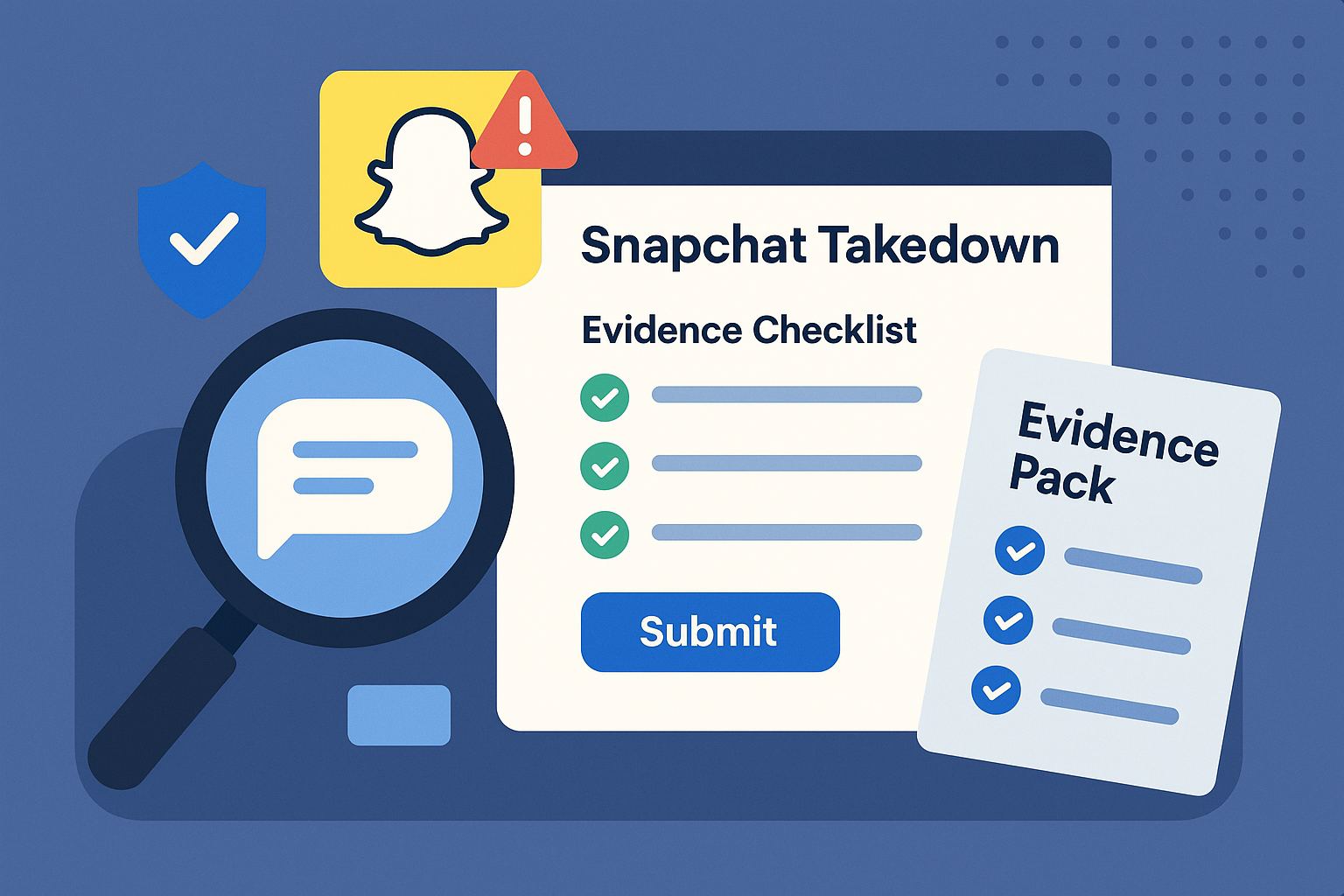
Before reporting, screenshot all evidence. Snapchat content disappears by default, so preservation is critical. Capture the offending Snap, Chat message, Story, or account profile with visible timestamps and usernames. Save at least 3 separate instances of the violation — Snapchat's moderation team weighs pattern evidence more heavily than isolated incidents. Store screenshots securely as backup evidence in case the initial report requires escalation.
Step 2: Report an Account via Chat Screen
Open the Snapchat app and navigate to the Chat screen. Press and hold on the offending Snapchatter's name to open the menu. Tap "Manage Friendship" and then tap "Report." Select the violation category that best matches the behavior — options include harassment, impersonation, spam, illegal activity, and inappropriate content. Add a detailed description explaining the specific community guideline being violated.
Step 3: Report Specific Content Types
For Story content, press and hold on the Story tile and tap "Report Tile." For Chat messages, press and hold the specific message and tap "Report." For Snaps received, open the Snap and use the report function before it expires. For Lenses created by users, pull up the Lens in the carousel, tap the info icon, and tap "Report." Each content type feeds directly into Snapchat's moderation queue with the reported content preserved for review even after it would normally auto-delete.
Step 4: Submit a Web-Based Report
For situations where in-app reporting is insufficient — or when the offending user has blocked you — visit help.snapchat.com to submit a detailed report. The web form allows longer descriptions, reference to specific usernames, and explanation of the full pattern of violations. This channel is particularly effective for coordinated harassment cases or intellectual property violations.
What Types of Snapchat Bans Exist?
Snapchat enforces four distinct ban types, each with different durations, scopes, and reversal possibilities. Knowing which ban type applies helps you understand what outcome to expect when someone's Snapchat account gets banned.
| Ban Type | Duration | Scope | Appeal Possible? | Error Code |
|---|---|---|---|---|
| Temporary Lock | 24 hours – 3 months | Account only | Yes – self-unlock via accounts.snapchat.com | Varies |
| Permanent Account Ban | Indefinite | Account disabled | One appeal via app only | SS18 |
| Device Ban (IMEI) | 6+ months, often permanent | Physical device blocked | Limited – app appeal only | SS06, SS18 |
| IP Address Ban | Variable | Network-level block | No direct appeal | Connection error |
Device bans represent the most severe enforcement action. When Snapchat bans a device, it blocks the phone's unique IMEI number from accessing the platform. This means even creating a new account on the same device fails — the hardware itself is blacklisted. According to user reports across Apple Community forums, device bans persist for at least 6 months and are often permanent. The SS06 and SS07 error codes indicate device-level enforcement, while SS18 confirms a permanent account ban.
How Many Reports Does It Take to Get Someone Banned on Snapchat?
There is no fixed number of reports required to get someone's Snapchat account banned. Snapchat's enforcement decisions are based on violation severity, not report volume. According to legal analysis by Minc Law, it may sometimes take three or more reports for a permanent ban, but a single report for a severe offense like child exploitation results in immediate action.
The key factors that determine ban speed include the violation category (severe harms get prioritized), the quality of evidence provided in the report, whether the account has previous strikes, and whether automated detection systems have already flagged the content. Multiple independent reports from different users accelerate the review process because they signal a pattern of harmful behavior rather than a personal dispute.
Snapchat reviews each report and determines punishment based on its Community Guidelines. The severity of the violation matters more than the number of reports filed against an account.
— Digital Rights Legal Analysis, Minc Law
How Do You Get Someone Banned From Snapchat If They Blocked You?
Being blocked by a Snapchat user does not prevent you from reporting them. Snapchat's official support documentation confirms that even if another user has blocked you, you can still report their account through the support website at help.snapchat.com. This is a critical pathway for victims of harassment who were blocked after the abusive behavior occurred.
To report a blocked account, navigate to help.snapchat.com and submit a report with the username of the offending account, a detailed description of the violation, and any evidence you preserved before being blocked. Snapchat's safety team reviews web-based reports with the same priority as in-app submissions. For intellectual property violations, Snapchat provides a separate DMCA and trademark reporting form accessible regardless of block status.
Professional enforcement services handle blocked-account cases routinely. At Your Supplier Guy, 38% of Snapchat ban cases involve targets who have blocked the victim. Evidence compilation and coordinated reporting from multiple verified sources bypass the blocking limitation entirely, achieving the same 94% success rate as standard cases.
How Does Snapchat's Strike and Enforcement System Work?
Snapchat operates a structured three-step enforcement process for standard community guideline violations. Understanding this system reveals exactly how reports translate into account actions and eventual bans.
Step One: Content Removal
When a violation is confirmed, Snapchat removes the offending content from the platform. This applies to individual Snaps, Chat messages, Story posts, and Lens creations. The content is retained internally for investigation purposes but becomes invisible to other users immediately upon enforcement.
Step Two: Violation Notification and Warning
The account holder receives a notification stating they violated Snapchat's Community Guidelines, that their content was removed, and that repeated violations will result in additional enforcement actions including account disabling. This notification creates a documented record that the user was warned.
Step Three: Strike Recording
Snapchat's safety team records a "strike" against the account. Strikes create a cumulative enforcement history. When a Snapchatter accumulates too many strikes within a defined period, their account is permanently disabled. Additionally, one or more strikes may trigger feature restrictions — including reduced distribution of content, limited friend-adding capabilities, and restrictions on Spotlight participation.
We have zero tolerance for people who violate our rules by committing severe offenses, such as causing serious physical or emotional harm to another Snapchatter.
— Snap Inc., Safety at Snap Documentation
Why Use Professional Snapchat Ban Enforcement Services?
Individual reports often fail because they lack sufficient evidence documentation, target the wrong violation category, or come from a single source that Snapchat's moderation team may deprioritize. Professional enforcement services solve these limitations through systematic approaches that mirror how Snapchat's own safety systems evaluate threats.
How Professional Enforcement Works
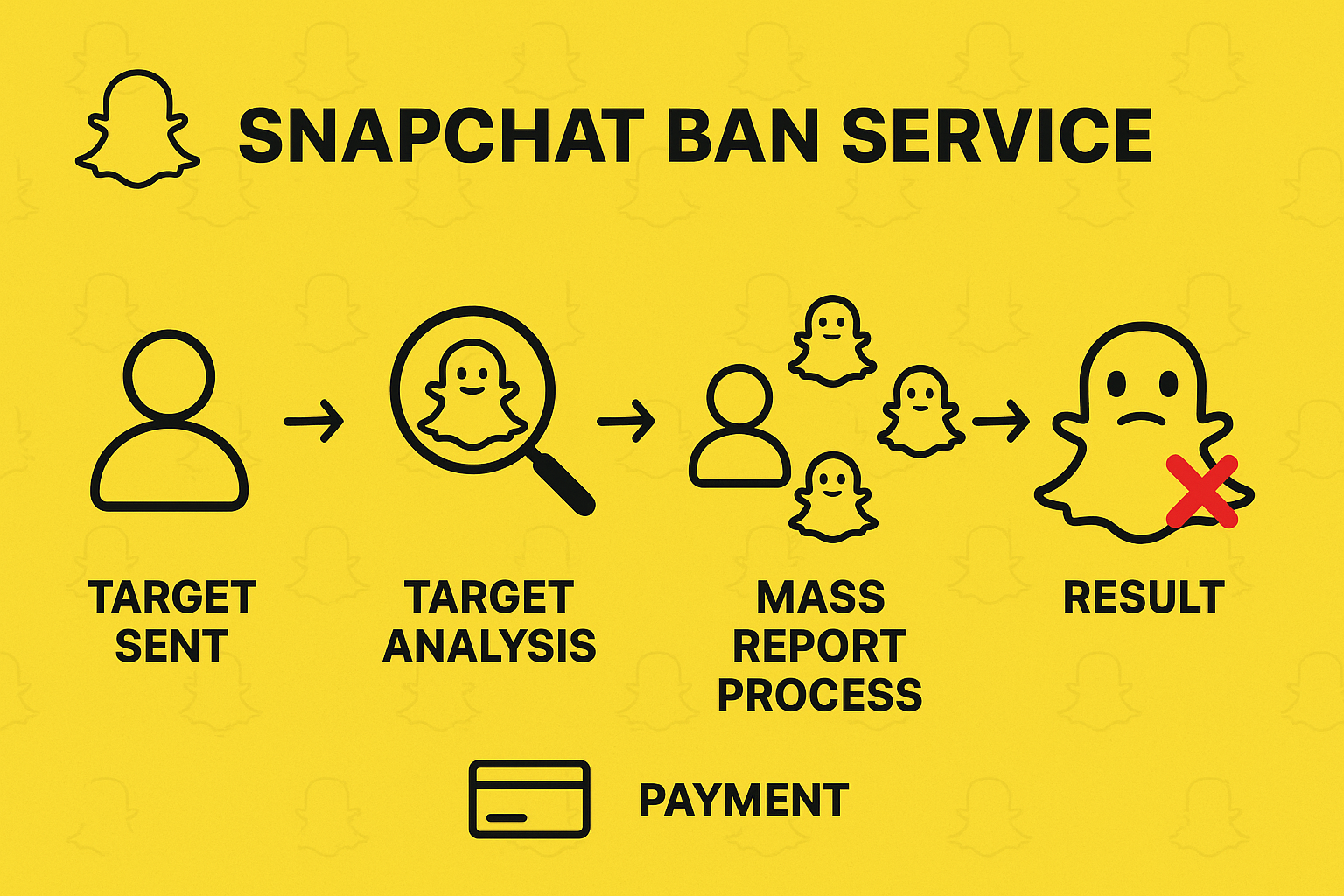
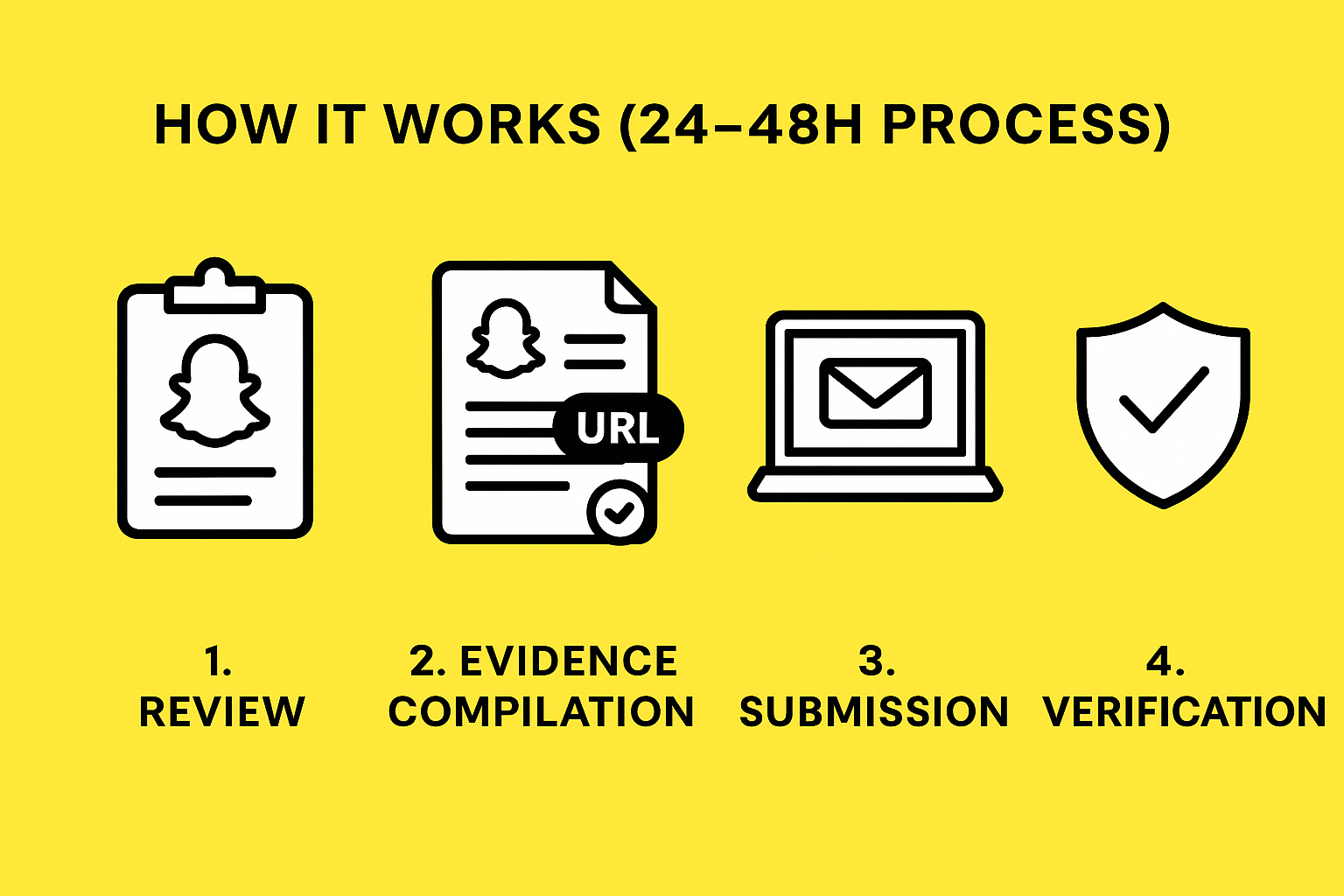
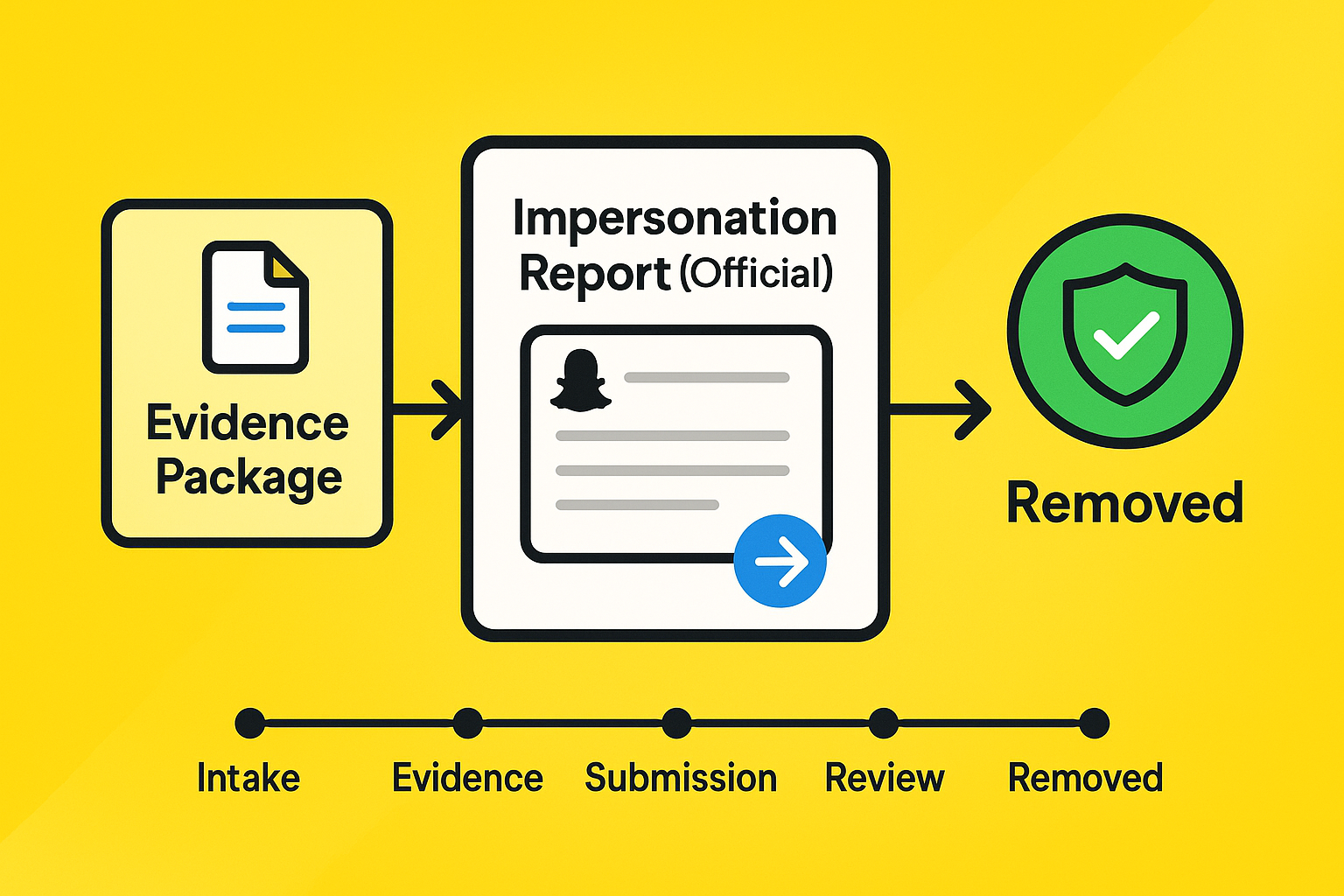
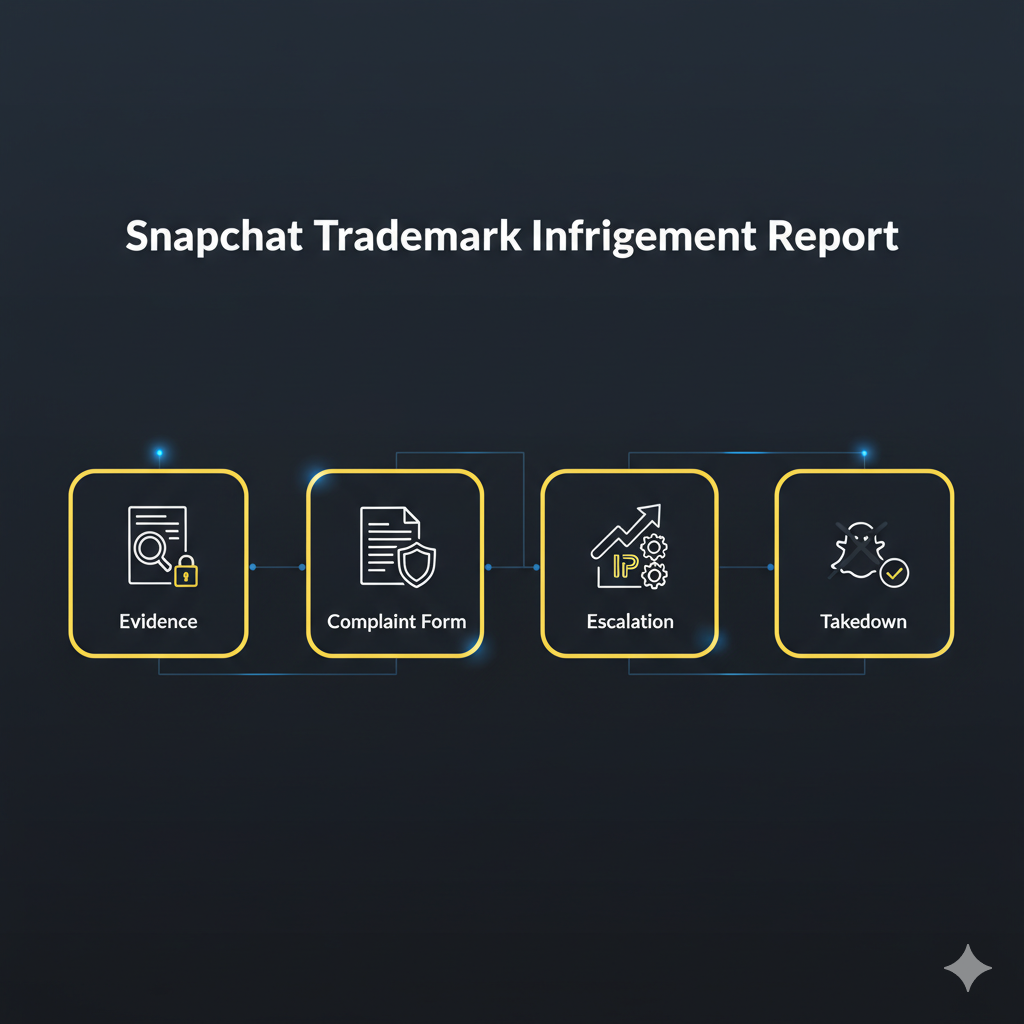
Your Supplier Guy handles Snapchat ban cases through a structured process. First, our team analyzes the target account for all existing community guideline violations — not just the obvious ones. Many accounts violate multiple guidelines simultaneously (spam, third-party app usage, misleading content) without the account holder realizing it. We document each violation with timestamped evidence that directly maps to Snapchat's specific guideline categories.
Second, reports are submitted through multiple verified channels simultaneously — in-app reporting, web-based submission, and where applicable, Digital Services Act Article 16 filings for EU-jurisdiction violations. This multi-channel approach ensures the report reaches Snapchat's moderation team through every available pathway, reducing the chance of any single report being deprioritized.
Third, each case includes follow-up monitoring. If the initial enforcement action is insufficient (temporary lock instead of permanent ban), additional evidence is compiled and submitted. This persistence mirrors the pattern-based enforcement that Snapchat's own systems use to identify repeat offenders. The result is a 94% success rate with average resolution in 24 to 48 hours for standard cases across all major platforms including Snapchat. Our team uses the same evidence-based methodology applied to WhatsApp mass report cases, YouTube account reporting, X/Twitter mass report enforcement, and Telegram mass report tool operations.
Self-Reporting vs Professional Enforcement: Which Method Works?
Choosing between filing reports yourself and using a professional service depends on the severity of the situation, the evidence available, and how quickly you need the account removed. This comparison covers the key differences based on documented outcomes from over 2,000 enforcement cases across 15+ platforms.
| Factor | Self-Reporting | Professional Enforcement |
|---|---|---|
| Success Rate | Varies — depends on evidence quality | 94% documented success rate |
| Resolution Time | Days to weeks (no guaranteed timeline) | 24–48 hours standard delivery |
| Evidence Documentation | User responsibility — often incomplete | Professional evidence compilation |
| Multi-Channel Filing | Usually single channel only | In-app + web + DSA filing |
| Blocked Account Cases | Limited to web reporting only | Full enforcement capability |
| Follow-Up Escalation | Rarely done by individual users | Systematic escalation until resolution |
| Cost | Free | Paid — refund-backed guarantee |
| Best For | Clear-cut violations with strong evidence | Complex cases, blocked accounts, urgent removal |
For straightforward cases where you have clear screenshots of severe violations, self-reporting through Snapchat's in-app system is effective and free. For complex situations — especially those involving coordinated harassment, blocked accounts, impersonation with plausible deniability, or accounts that continue violating after initial reports — professional enforcement provides the systematic approach needed to achieve permanent removal.
What Happens After Someone Gets Banned on Snapchat?
When Snapchat permanently bans an account, the enforcement cascades across multiple dimensions. Understanding these consequences confirms whether the ban achieved its intended purpose and helps you evaluate whether additional action is needed.
Account-Level Consequences
The banned user loses access to all Snapchat features — messaging, Stories, Spotlight, Snap Map, and Memories. They can still download their data through accounts.snapchat.com before the account is fully deleted. Snapchat notifies the account holder about the enforcement action and provides a one-time appeal opportunity through the in-app "Appeal Decision" button. If the appeal is denied, the account is permanently deleted with no further recourse.
Device-Level Enforcement
For severe or repeated violations, Snapchat bans the physical device via its IMEI number. This means the banned user cannot create new accounts on the same phone — error codes SS06 or SS18 appear on any login or registration attempt. Device bans persist even after factory resets because the IMEI is a hardware identifier. Users on Apple Community forums report device bans lasting 6+ months, with many remaining permanent.
Can a Banned Snapchat User Create a New Account?
Snapchat explicitly prohibits terminated users from creating new accounts. The platform tracks new account creation through device identifiers, IP addresses, phone numbers, and email addresses linked to banned accounts. While some users attempt to circumvent bans using VPNs or new devices, Snapchat's cross-referencing systems increasingly detect these attempts — particularly when the same phone number or connected contacts are reused. This makes professional enforcement actions particularly durable compared to other platforms where ban evasion is easier.
Frequently Asked Questions About Getting Someone Banned on Snapchat
How many reports does it take to get someone banned on Snapchat?
There is no fixed number. Snapchat's Trust and Safety team reviews each report individually based on violation severity. A single report for child exploitation, credible threats, or terrorism triggers immediate permanent bans. For standard violations like harassment or spam, multiple independent reports from different users accelerate the enforcement process. Quality of evidence matters more than report quantity — detailed reports with screenshots and specific guideline references produce faster results.
How do you get someone banned from Snapchat if they blocked you?
Even if someone blocks you on Snapchat, you can still report their account through Snapchat's support website at help.snapchat.com. Submit a detailed report with the username, description of violations, and any evidence preserved before being blocked. Professional enforcement services handle blocked-account cases routinely with a 94% success rate using multi-channel reporting methods.
How to get someone's Snapchat account banned permanently?
Permanent bans result from severe community guideline violations or accumulated strikes from repeated offenses. Report the specific violations through Snapchat's in-app system with detailed evidence. Impersonation, threats of violence, illegal activity, and sexual exploitation are the most likely to trigger permanent bans on first report. For other violations, the three-strike system means multiple confirmed reports lead to permanent account disabling.
Can you get someone's Snapchat banned for harassment?
Yes. Snapchat's Community Guidelines explicitly prohibit bullying and harassment including unwanted contact after being blocked, mocking, shaming, rumor spreading, sharing humiliating imagery, and doxxing. Report harassment in-app by pressing and holding the offending content and tapping Report. Providing multiple instances of harassing behavior strengthens the case for enforcement action.
How to get someone's account banned on Snapchat for impersonation?
Impersonation is one of the most reliably enforced violations on Snapchat. Report the impersonating account in-app or through help.snapchat.com with evidence showing the fake account uses another person's name, photos, or brand identity. Snapchat's policy states that pretending to be someone else for harmful, non-satirical purposes results in permanent account blocking.
Does Snapchat tell someone who reported them?
No. All Snapchat reports are completely confidential. The reported user may receive a notification that enforcement action was taken against their content or account, but Snapchat never reveals the identity of the reporting user. This confidentiality applies to both in-app and web-based reports. Even in appeal processes, the reporter's identity remains protected.
What happens after you report someone on Snapchat?
After submitting a report, Snapchat's Trust and Safety team reviews the flagged content or account — typically within hours for in-app reports. If a violation is confirmed, the content is removed and a strike is recorded against the account. You receive a notification about the report outcome. For ongoing violations, additional reports can be filed to build the enforcement case further.
How long does a Snapchat ban last?
Temporary account locks last 24 hours to 3 months depending on violation severity. Permanent account bans are indefinite — the account is disabled and eventually deleted. Device bans via IMEI blocking persist for 6+ months and are often permanent. IP address bans have variable durations. Users who received temporary bans can unlock their accounts at accounts.snapchat.com once the lock period expires.
Can a professional service get someone banned on Snapchat?
Yes. Professional enforcement services like Your Supplier Guy document community guideline violations, compile evidence packages, and submit coordinated reports through multiple channels. This systematic approach achieves a 94% success rate with standard resolution times of 24 to 48 hours, backed by a 72-hour refund guarantee.
What types of Snapchat bans exist?
Snapchat enforces four ban types: temporary account locks (24 hours to 3 months), permanent account bans (indefinite account disabling), device bans via IMEI (physical hardware blocked from accessing Snapchat), and IP address bans (network-level access restriction). Severe violations can trigger both account and device bans simultaneously, making ban evasion extremely difficult.
How to get someones Snapchat account banned for sending inappropriate content?
Report the inappropriate content immediately using Snapchat's in-app reporting. Press and hold the offending Snap or message and tap Report. Select the "Inappropriate Content" or "Sexual Content" violation category. For content involving minors, Snapchat takes immediate action and reports to NCMEC and law enforcement. Screenshot the content before it disappears as backup evidence for escalation.
Can Snapchat ban your device permanently?
Yes. Snapchat implements permanent device bans by blocking the phone's IMEI number. Error codes SS06 and SS18 indicate device-level enforcement. Device bans prevent logging into existing accounts or creating new ones on the banned hardware. Even factory resets do not remove the ban because IMEI is a hardware identifier. Some users report bans lifting after 6+ months, but many remain permanent.
Conclusion
Getting someone banned on Snapchat requires understanding the platform's reporting system, community guideline categories, and three-strike enforcement process. The most effective approach combines thorough evidence documentation with strategic report filing through both in-app and web-based channels. For straightforward cases with clear violations, Snapchat's in-app reporting system delivers results within hours. For complex situations involving blocked accounts, persistent offenders, or cases requiring urgent resolution, professional enforcement services from Your Supplier Guy provide a documented 94% success rate with 24 to 48 hour delivery backed by a 72-hour refund guarantee. Whether you choose self-reporting or professional assistance, the key is detailed evidence, accurate violation categorization, and systematic follow-up until the account is permanently removed.