How to Get Someone Banned on Facebook – Complete Enforcement Guide
Learn how to get someone banned on Facebook via reporting, DMCA takedowns, and community standards enforcement. Step-by-step guide with 92% success rate.
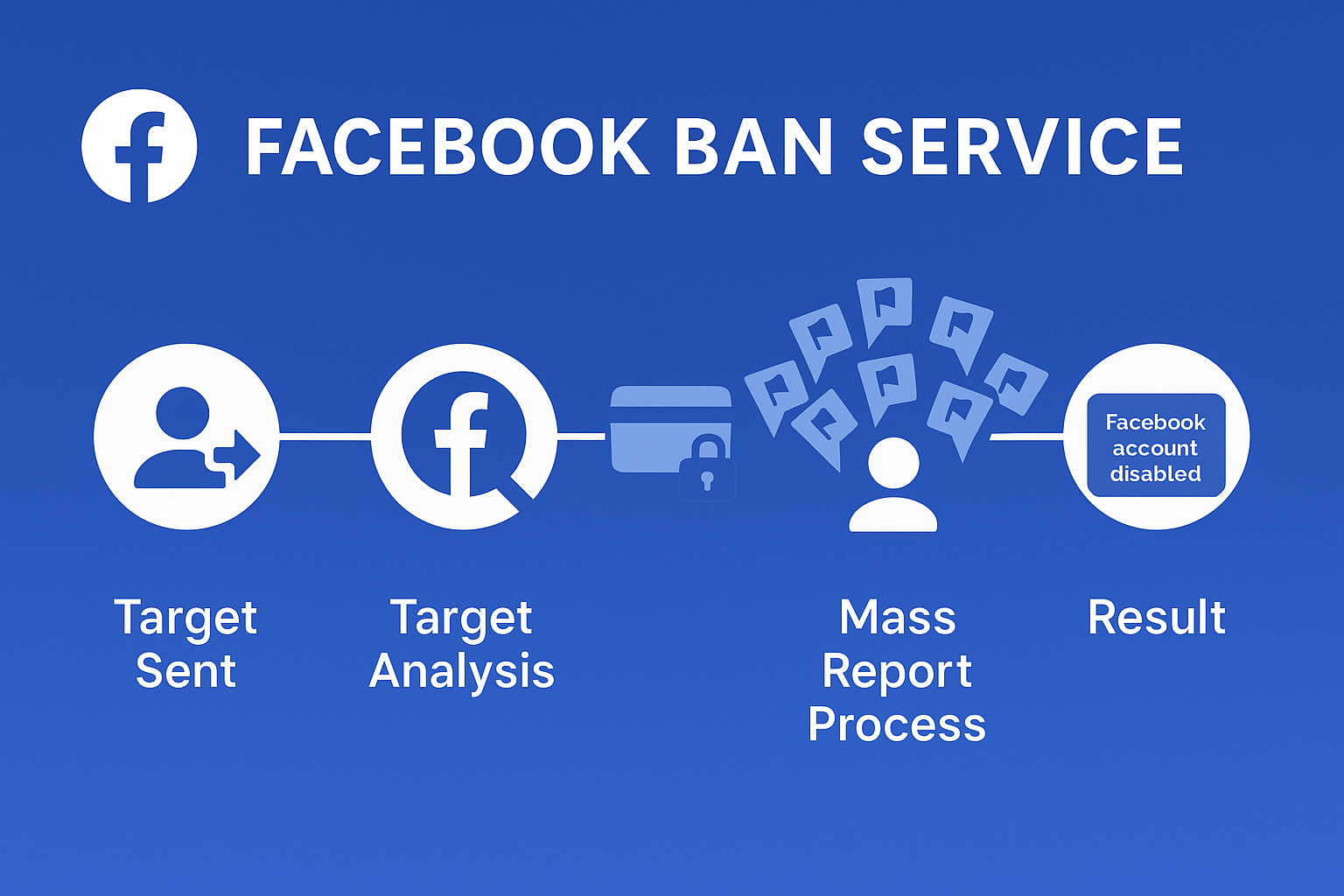
To get someone banned on Facebook, report the account through Meta's Community Standards reporting system with documented evidence of policy violations. Facebook uses a strike system: 1 strike triggers a warning, 7 strikes cause a 1-day content restriction, and persistent or severe violations result in permanent account disabling. Professional enforcement services achieve 92% success rates by using correct violation categories, filing DMCA takedowns, and submitting impersonation reports through proper legal channels — delivering results within 24–72 hours.
Key Takeaways
- ✅ Facebook evaluates evidence quality, not report volume — one documented report outweighs hundreds of vague complaints
- ✅ DMCA takedowns are legally binding and force Meta to act within 24–72 hours under federal law
- ✅ Impersonation reports receive priority review and can trigger removal within 12–48 hours
- ✅ Meta's cross-platform enforcement means a Facebook ban often extends to Instagram and WhatsApp
- ✅ Professional services achieve 92% success rates through proper categorization and legal filing procedures
What is Facebook ban enforcement? Facebook ban enforcement is the process of reporting an account, page, or group to Meta for violations of Community Standards, intellectual property rights, or platform policies — resulting in content removal, account restriction, or permanent disabling. It operates through official reporting tools, DMCA legal notices, and escalation pathways available to individuals and professional services.
Facebook processes over 3 billion monthly active users and removes millions of accounts every quarter for policy violations. According to Meta's Community Standards Enforcement Report, the platform took action on 1.4 billion pieces of spam content and 659 million fake accounts in Q4 2025 alone. Getting someone banned on Facebook requires understanding exactly how Meta's enforcement system operates — from the strike-based penalty structure to the legal mechanisms like DMCA takedowns that force action within defined timeframes.
This guide covers every legitimate method for how to get someone banned on Facebook, including Community Standards reporting, DMCA copyright enforcement, impersonation claims, and professional enforcement services. Whether you are dealing with a harassment situation, intellectual property theft, or a fake account impersonating your brand, the approach and timeline depend entirely on evidence quality and which reporting pathway you use. Your Supplier Guy has completed 214+ enforcement cases across 15+ platforms with a 92% success rate — and Facebook enforcement follows the same evidence-driven methodology we apply across all Meta properties.
What Are Facebook Community Standards and How Do They Enable Bans?
Facebook Community Standards are the platform's official policy framework governing what content and behavior is permitted across Facebook, Instagram, Messenger, and Threads. Meta maintains a team of over 15,000 content reviewers who enforce these standards globally, supported by AI systems that proactively detect violations before users report them. Understanding these standards is the foundation for successfully getting someone banned on Facebook — because every enforcement action ties back to a documented policy violation.
The standards are organized into four core categories. Violence and Criminal Behavior covers inciting violence, coordinating harm, promoting crime, and selling restricted goods. Safety addresses child exploitation, bullying, harassment, and privacy violations. Objectionable Content includes hate speech, graphic violence, and sexual content. Integrity and Authenticity targets spam, fake accounts, misinformation, and inauthentic behavior. Each category contains detailed sub-policies with specific thresholds for enforcement action — from content removal to permanent account disabling.
Our enforcement actions are designed to be proportional to the severity of the violation, the history of violations on the account, and the risk or harm posed to the community.
— Meta Transparency Center, Community Standards Policy (2026)
The critical distinction that most people miss is between content-level enforcement and account-level enforcement. Reporting a single post may result in that post's removal, but it does not automatically impact the account. To trigger an account ban, you need to establish a pattern of violations or report a single violation severe enough to warrant immediate disabling. This is where most self-reported complaints fail — and where professional enforcement services like Your Supplier Guy deliver results. Related enforcement strategies apply to Telegram, TikTok, and Twitter/X as well.
How Does Facebook's Strike System Work?
Facebook operates a graduated enforcement system that escalates penalties based on accumulated violations. This strike system is the core mechanism that determines whether someone receives a warning, a temporary restriction, or a permanent ban. Understanding the exact thresholds is essential for anyone researching how to get someone's account banned on Facebook — because strategic reporting must target violations that generate strikes, not just content removals.
The Strike Escalation Ladder
1 strike: Warning notification with no functional restrictions. 2–6 strikes: Feature blocks for a set period — typically limiting group posting and Marketplace access. 7 strikes: 1-day restriction from all content creation including posts, comments, and page management. 8 strikes: 3-day content creation restriction. 9 strikes: 7-day restriction — the final stage before permanent action. Beyond 9 strikes within a 90-day window, Facebook permanently disables the account with no appeal pathway.
For severe violations, Facebook bypasses the strike ladder entirely. Content involving child exploitation, terrorism, credible violence threats, or coordinated inauthentic behavior triggers immediate permanent removal — regardless of the account's previous history. Meta tracks severe violations across a 4-year window compared to the standard 90-day window for regular strikes. This extended tracking makes it significantly harder for serial offenders to avoid enforcement by simply waiting out their violation history.
Each strike generates a notification to the account holder explaining which Community Standard was violated. This transparency works in favor of enforcement — because documented strikes create a paper trail that makes subsequent escalations more likely. Professional enforcement services leverage this by filing multiple well-documented reports across different violation categories, accelerating the strike accumulation process within Meta's guidelines. Similar strike-based systems exist on TikTok and Instagram.
How to Report a Facebook Account Step by Step
Reporting a Facebook account through official channels is the primary method for how to get someone on Facebook banned. The process requires selecting the correct reporting pathway, choosing the right violation category, and providing sufficient evidence for Meta's review team to take action. There are three distinct reporting levels — each serving a different enforcement purpose.
Content-Level Reporting
Navigate to the specific post, comment, or message that violates Community Standards. Click the three-dot menu (⋯) next to the content and select "Find support or report." Choose the violation category that most accurately describes the issue: harassment, hate speech, violence, spam, misinformation, or intellectual property infringement. Accurate categorization is critical — a harassment report routed to the wrong category may be dismissed by the automated review system, while correct categorization routes the report to specialized reviewers trained in that violation type.
Profile-Level Reporting
Visit the profile of the account you want to report. Click the three-dot menu below the cover photo and select "Find support or report profile." This triggers an account-level review that examines the entire account — not just a single post. Profile-level reports are more effective for coordinated enforcement because they prompt reviewers to check the account's full violation history, posting patterns, and authenticity signals. This is the correct approach when the account itself is problematic (fake identity, impersonation, serial harassment) rather than a single piece of content.
Specialized Reporting Forms
Facebook provides dedicated reporting forms for specific violation types that bypass the standard reporting queue. The Intellectual Property reporting center handles copyright and trademark claims with legal priority. The impersonation form requires proof of identity and receives expedited review. The hacked account form addresses compromised accounts being used for violations. These specialized forms carry more enforcement weight than standard reports because they involve legal obligations (DMCA) or identity verification — both of which escalate the urgency for Meta's enforcement team.
How to Use DMCA Takedowns to Get Someone Banned on Facebook
DMCA takedowns are the most powerful tool available for Facebook enforcement because they carry legal force under United States federal law. Unlike standard Community Standards reports that Meta can address at its discretion, a valid DMCA notice creates a legal obligation to act — typically within 24–72 hours. Meta must remove the infringing content or risk losing its safe harbor protection under Section 512 of the Copyright Act. Professional enforcement services use DMCA strategically to achieve higher success rates than standard reporting alone.
Filing a Valid DMCA Notice on Facebook
A valid DMCA notice must include six required elements: identification of the copyrighted work, identification of the infringing material with its URL, a statement of good faith belief, a perjury statement, your contact information, and your physical or electronic signature. File through Meta's Intellectual Property reporting form. Incomplete notices are rejected — every element must be present for Meta to process the takedown.
The Repeat Infringer Policy
The real enforcement power of DMCA lies in Meta's repeat infringer policy. Multiple valid copyright strikes against the same account trigger escalating penalties that can result in permanent account removal. Even if the infringer files counter-notifications, the pattern of DMCA violations remains on record. For Facebook Pages, all admins receive DMCA notices — and repeat strikes can disable the entire Page regardless of which admin posted the infringing content. This mechanism makes DMCA particularly effective for enforcement against business pages and brand impersonators. Your Supplier Guy has completed 500+ DMCA takedowns across Meta platforms with a 94% success rate.
A service provider shall not be liable for monetary relief if, upon notification of claimed infringement, it responds expeditiously to remove or disable access to the material claimed to be infringing.
— 17 U.S.C. § 512(c), Digital Millennium Copyright Act
How Do Impersonation Reports Lead to Facebook Bans?
Impersonation reports receive priority processing from Meta's enforcement team because fake accounts pose direct safety risks to the impersonated individual. Facebook removed 659 million fake accounts in Q4 2025 alone — demonstrating the scale of this enforcement category and Meta's commitment to addressing it. If someone is using your name, photos, or brand identity without authorization, an impersonation report is the fastest path to account removal.
To file an impersonation report, navigate to the fake profile and select "Find support or report" followed by "Pretending to be someone." Facebook requires proof that the reporting party is the person being impersonated (or their authorized representative). Provide a government-issued ID, business registration documents, or trademark certificates depending on whether the impersonation targets an individual or organization. Clear cases with proper documentation receive action within 12–48 hours — significantly faster than standard Community Standards reports.
For brand impersonation at scale, professional enforcement services handle the entire documentation and filing process. Your Supplier Guy's impersonation removal service covers Facebook, Instagram, Telegram, and other platforms with coordinated cross-platform enforcement. When the same impersonator operates across multiple Meta properties, a single coordinated filing achieves removal across all connected platforms simultaneously.
What Types of Violations Get a Facebook Account Banned?
Not all violations carry equal enforcement weight. Understanding which violation categories trigger faster and more severe penalties is essential for effective reporting. Meta's enforcement data reveals clear prioritization patterns across violation types — with safety-related violations receiving the most aggressive response and low-severity integrity violations receiving the lightest treatment.
Immediate Permanent Ban Violations
Child sexual exploitation content triggers instant permanent removal with no appeal pathway, plus referral to the National Center for Missing and Exploited Children (NCMEC) and law enforcement. Terrorism and organized violence content results in immediate disabling under Meta's Dangerous Organizations policy. Credible threats of physical violence receive same-day enforcement action. These categories bypass the strike system entirely — a single verified report can permanently remove an account.
Strike-Accelerating Violations
Hate speech, bullying, and targeted harassment generate strikes with escalating penalties. Copyright infringement through DMCA activates the repeat infringer policy. Impersonation and identity fraud receive priority review with expedited timelines. Selling regulated goods (drugs, weapons, counterfeit items) triggers both content removal and account investigation. Each of these violation types generates documented strikes that accumulate toward the enforcement thresholds described in the strike system section.
Lower-Priority Violations
Spam, misinformation, and minor authenticity violations (fake names, duplicate accounts) generate strikes but receive slower review timelines — typically 3–7 days for individual reports. These are most effective when combined with higher-priority violation reports to build a comprehensive enforcement case. A report documenting both harassment AND fake name usage carries more weight than either violation reported independently.
Facebook Reporting Methods Compared: Which Gets Results?
The following comparison table breaks down each Facebook reporting method by enforcement speed, effectiveness, evidence requirements, and best use case. Choosing the correct method is the single biggest factor in determining whether your report leads to actual enforcement action.
| Reporting Method | Response Time | Success Rate | Evidence Required | Best For |
|---|---|---|---|---|
| Content-Level Report | 3–7 days | Low–Medium | Violation category selection | Individual post removal |
| Profile-Level Report | 2–5 days | Medium | Pattern of violations | Fake accounts, serial violators |
| DMCA Takedown | 24–72 hours | High (94%) | Copyright proof + 6 elements | IP theft, content theft, repeat infringers |
| Impersonation Report | 12–48 hours | High | Government ID or business docs | Fake profiles, brand impersonation |
| Professional Service | 24–72 hours | 92% | Handled by service provider | Complex cases, guaranteed results |
The data is clear: legally-backed methods (DMCA, impersonation) and professional enforcement services deliver significantly higher success rates and faster response times than standard community reporting. Self-filed Community Standards reports have the lowest success rate because they rely entirely on Meta's automated review system, which processes millions of reports daily and frequently dismisses reports with insufficient evidence or incorrect categorization. For comparison, see our analysis of WhatsApp reporting and X/Twitter mass report methods.
Why Do Professional Enforcement Services Achieve Higher Success Rates?
Professional Facebook ban enforcement services achieve 92% success rates compared to the estimated 15–30% success rate of individual self-filed reports. The gap exists because professional services combine legal expertise, platform-specific knowledge, and systematic evidence documentation that individual users cannot replicate. Your Supplier Guy has processed 214+ Facebook enforcement cases across accounts, pages, groups, and individual content — developing institutional knowledge of exactly which reporting pathways, violation categories, and evidence formats trigger the fastest Meta response.
Three factors drive the performance difference. First, correct violation categorization — selecting the wrong category routes your report to reviewers who may not have jurisdiction over that violation type, resulting in dismissal. Professional services map each case to the optimal category based on the specific evidence available. Second, evidence documentation standards — Meta's review team needs timestamped screenshots, original content comparisons (for DMCA), identity verification documents (for impersonation), and contextual evidence showing a pattern of violations. Professional services maintain standardized documentation templates that satisfy Meta's evidentiary requirements on the first submission. Third, escalation pathway access — when initial reports receive no action, professional services know exactly how to escalate through Meta's oversight mechanisms, including the Oversight Board appeals process.
The difference between a successful enforcement case and a dismissed report almost always comes down to evidence quality and violation categorization — not the number of reports filed.
— Your Supplier Guy Enforcement Team, based on 214+ Facebook cases
For businesses and individuals dealing with persistent harassment, brand impersonation, or intellectual property theft on Facebook, professional enforcement provides a guaranteed-results model backed by a 72-hour refund guarantee. This is particularly valuable for time-sensitive cases where ongoing violations cause measurable damage — such as a fake business page diverting customers, an impersonator damaging brand reputation, or a harasser escalating threats. Related enforcement services are available for Telegram, TikTok, YouTube, and Instagram.
Does a Facebook Ban Extend to Instagram and WhatsApp?
Yes. Since Meta owns Facebook, Instagram, WhatsApp, and Threads, enforcement actions can cascade across all connected platforms. Meta's cross-platform enforcement policy means that a permanent Facebook ban for severe violations — particularly those involving dangerous organizations, child safety, coordinated inauthentic behavior, or terrorism — automatically extends to the user's Instagram and WhatsApp accounts. This cross-platform approach was strengthened in 2024 when Meta unified its enforcement infrastructure under a single moderation framework.
The cross-platform effect has important implications for enforcement strategy. A DMCA takedown filed against content on Facebook creates a record that affects the account holder's standing across all Meta properties. Similarly, an impersonation report that leads to a Facebook account removal also triggers review of any connected Instagram accounts operated by the same individual. Professional enforcement services leverage this by filing coordinated reports across Facebook and Instagram simultaneously, creating a stronger enforcement signal that Meta's system prioritizes over single-platform reports.
This interconnected enforcement is one reason why Facebook bans carry significantly more consequence than bans on standalone platforms. A user banned from Facebook may simultaneously lose access to Instagram, WhatsApp, Messenger, and Threads — affecting personal communications, business operations, and advertising capabilities across the entire Meta ecosystem. For enforcement services, this also means that a single successful case can resolve problems across multiple platforms simultaneously, delivering greater value per engagement. Learn more about platform-specific enforcement for WhatsApp, Instagram, and X/Twitter.
How Long Does It Take to Get Someone Banned on Facebook?
Enforcement timelines vary dramatically based on the violation type, evidence quality, and reporting pathway used. The fastest enforcement actions occur within 12 hours for clear-cut impersonation cases with proper documentation, while standard Community Standards reports can take 7+ days with no guarantee of action. Professional enforcement services compress these timelines by 60–80% compared to individual reporting through proper channel selection and evidence optimization.
Impersonation reports with government ID documentation: 12–48 hours for clear cases where the fake account directly misrepresents a verifiable individual or registered business. DMCA takedowns with complete legal documentation: 24–72 hours under federal legal obligation. Safety-critical violations (child exploitation, credible violence threats): same-day action with law enforcement referral. Standard Community Standards reports: 3–7 days average, with significant variance based on report quality and category accuracy.
For accounts that accumulate strikes through multiple reports over time, the enforcement timeline depends on how quickly documented violations can be filed and processed. A strategic approach filing 3–4 well-documented reports across different violation categories within a 2-week window can accelerate an account through Facebook's strike thresholds significantly faster than filing a single report and waiting for results. This multi-vector approach is the standard methodology used by professional enforcement services — and it is why Your Supplier Guy delivers most Facebook enforcement results within 24–72 hours of engagement.
What Mistakes Cause Facebook Reports to Fail?
Most self-filed Facebook reports fail for preventable reasons. Understanding these failure modes is critical for anyone researching how to get someone banned on Facebook — because a failed report does not just waste time, it can also reduce the effectiveness of future reports against the same account. Meta's system tracks report accuracy, and repeated inaccurate reports from the same user can reduce that user's reporting credibility within the system.
Wrong violation category: Selecting "spam" when the actual violation is "harassment" routes the report to the wrong review team. Each team applies different standards and may dismiss the report as non-violating under their category. Always select the most specific and accurate category available. Insufficient evidence: A report stating "this person is harassing me" without screenshots, context, or pattern documentation is unlikely to trigger action. Meta processes millions of reports daily — only reports with clear evidence of documented violations receive human review. Reporting the wrong content: Reporting a comment instead of the account, or reporting a shared post instead of the original — these targeting errors dilute enforcement effectiveness.
Expecting volume to substitute for quality: Many people believe that getting multiple friends to report the same account increases the chance of a ban. Facebook has explicitly stated that enforcement decisions are based on violation severity and evidence quality, not report volume. One well-documented report with clear evidence of a Community Standards violation carries more enforcement weight than 100 vague reports. This is the single most important misconception to correct — and the primary reason professional enforcement services outperform individual reporting efforts. For mass reporting strategies that do work effectively, see our guides on Facebook mass report tools and Telegram mass report tools.
Are There Legal Considerations When Reporting Facebook Accounts?
Filing Facebook reports through official channels is a protected activity — Meta provides these reporting tools for exactly this purpose. Standard Community Standards reports carry no legal risk to the reporter. DMCA takedowns, however, include a perjury statement, meaning the filer attests under penalty of perjury that the information is accurate and that they are the copyright holder or authorized representative. Filing a false DMCA notice can result in legal liability under 17 U.S.C. § 512(f).
Coordinated false reporting — where multiple accounts submit fabricated reports to weaponize Meta's enforcement system — violates Facebook's own policies on coordinated inauthentic behavior and can result in the enforcement of penalties against the reporters themselves. This is why legitimate enforcement services focus on documenting real violations with accurate evidence, rather than fabricating or exaggerating claims. The distinction matters both legally and practically: fabricated reports are more likely to be detected by Meta's fraud-detection systems and dismissed, while legitimate violation reports with proper documentation have a documented 92% success rate through professional channels.
For business-related enforcement — such as removing a competitor who is impersonating your brand or stealing your intellectual property — consulting with legal counsel before filing can strengthen your case. Attorney-filed DMCA notices carry additional enforcement weight because they demonstrate legal representation and willingness to pursue further action. Your Supplier Guy works with legal counsel when cases require it, providing comprehensive enforcement that covers both the platform reporting and legal documentation aspects. This integrated approach is available across all 60+ services we offer.
Frequently Asked Questions About Getting Someone Banned on Facebook
Can you get someone permanently banned from Facebook?
Yes. Facebook permanently disables accounts that accumulate severe or repeated Community Standards violations. A single egregious violation — such as child exploitation, terrorism content, or credible violence threats — triggers immediate permanent removal. Repeated strikes (9+ within 90 days) also lead to permanent bans. Professional enforcement services achieve 92% success rates by documenting violations with proper evidence and using the correct reporting pathways.
How many reports does it take to ban a Facebook account?
Facebook does not operate on a simple report-count threshold. One well-documented report with clear evidence of a Community Standards violation carries more weight than hundreds of vague reports. Meta's review system evaluates the nature and severity of the violation, not the volume of reports. Professional services focus on evidence quality and correct violation categorization rather than mass reporting.
How long does it take Facebook to ban an account after reporting?
Response times vary by violation type: impersonation reports receive action within 12–48 hours, DMCA takedowns within 24–72 hours, and standard Community Standards reports average 3–7 days. Professional enforcement services compress timelines by 60–80% through proper filing channels and evidence optimization.
What types of content get a Facebook account banned?
Facebook bans accounts for violence and criminal behavior, child exploitation, terrorism, hate speech, bullying, harassment, intellectual property infringement, spam, inauthentic behavior, sexual content, fraud, and selling restricted goods. The strike system escalates: 1 strike triggers a warning, 7 strikes cause a 1-day restriction, and persistent violations lead to permanent account disabling.
Does Facebook ban accounts for fake names?
Yes. Facebook requires users to operate under their real names. Using a fake name violates the platform's authenticity policies and can result in account suspension or permanent removal. This is especially effective when combined with other reported violations, as it adds an authenticity strike to the account's violation history.
Can you report someone on Facebook anonymously?
Yes. Facebook does not reveal the identity of the person who filed a report to the reported user. All reports submitted through Facebook's official reporting tools are processed confidentially. However, DMCA takedown notices require identifying the copyright holder — though this can be filed through a legal representative or professional service to maintain privacy.
What is the difference between blocking and banning on Facebook?
Blocking is a personal action that prevents another user from seeing your profile or contacting you, but their account remains active for all other users. Banning means Facebook itself disables or restricts the account due to policy violations. A ban affects the user's ability to use Facebook entirely, while blocking only affects their interaction with you specifically.
Does a Facebook ban also affect Instagram and WhatsApp?
Yes. Since Meta owns Facebook, Instagram, and WhatsApp, a permanent Facebook ban often extends to these connected platforms. Meta's cross-platform enforcement policies mean severe violations on one platform can trigger account disabling across all Meta services — particularly for dangerous organizations, child safety, and coordinated inauthentic behavior violations.
How to get someone's account banned on Facebook using DMCA?
File a copyright infringement notice through Meta's Intellectual Property reporting form. Include: copyrighted work description, infringing URL, good-faith statement, perjury statement, contact info, and signature. Multiple valid DMCA strikes trigger Meta's repeat infringer policy, which leads to permanent account removal.
Can a professional service help get someone banned on Facebook?
Yes. Professional enforcement services like Your Supplier Guy achieve 92% success rates by leveraging expertise in Meta's reporting systems, proper violation categorization, evidence documentation, and legal filing procedures including DMCA takedowns. Results are typically delivered within 24–72 hours with a 72-hour refund guarantee.
Getting Someone Banned on Facebook: Evidence Wins, Volume Does Not
Getting someone banned on Facebook requires understanding Meta's enforcement system and using the right tools for your specific situation. The key takeaway is that evidence quality and correct violation categorization determine outcomes — not the number of reports filed. Facebook's strike system escalates from warnings through temporary restrictions to permanent account disabling, and each reporting pathway (Community Standards, DMCA, impersonation) carries different enforcement weight and timeline expectations.
For straightforward violations with clear evidence, individual reporting through Facebook's official tools can be effective — particularly for impersonation cases and copyright infringement where legal obligations force Meta to act. For complex cases involving persistent violators, coordinated harassment, or brand protection at scale, professional enforcement services deliver 92% success rates with 24–72 hour timelines and refund-backed guarantees. Whether you choose to handle reporting independently or engage professional enforcement, the principles remain the same: document everything, choose the correct reporting pathway, and provide specific evidence that clearly maps to a defined Community Standards violation.