Facebook Ban Service: DMCA Takedown & Page Removal Guide
Professional Facebook ban service with 92% success rate. Expert DMCA takedown, copyright enforcement & page removal across Facebook. Get results in 24–48h.
Quick Answer
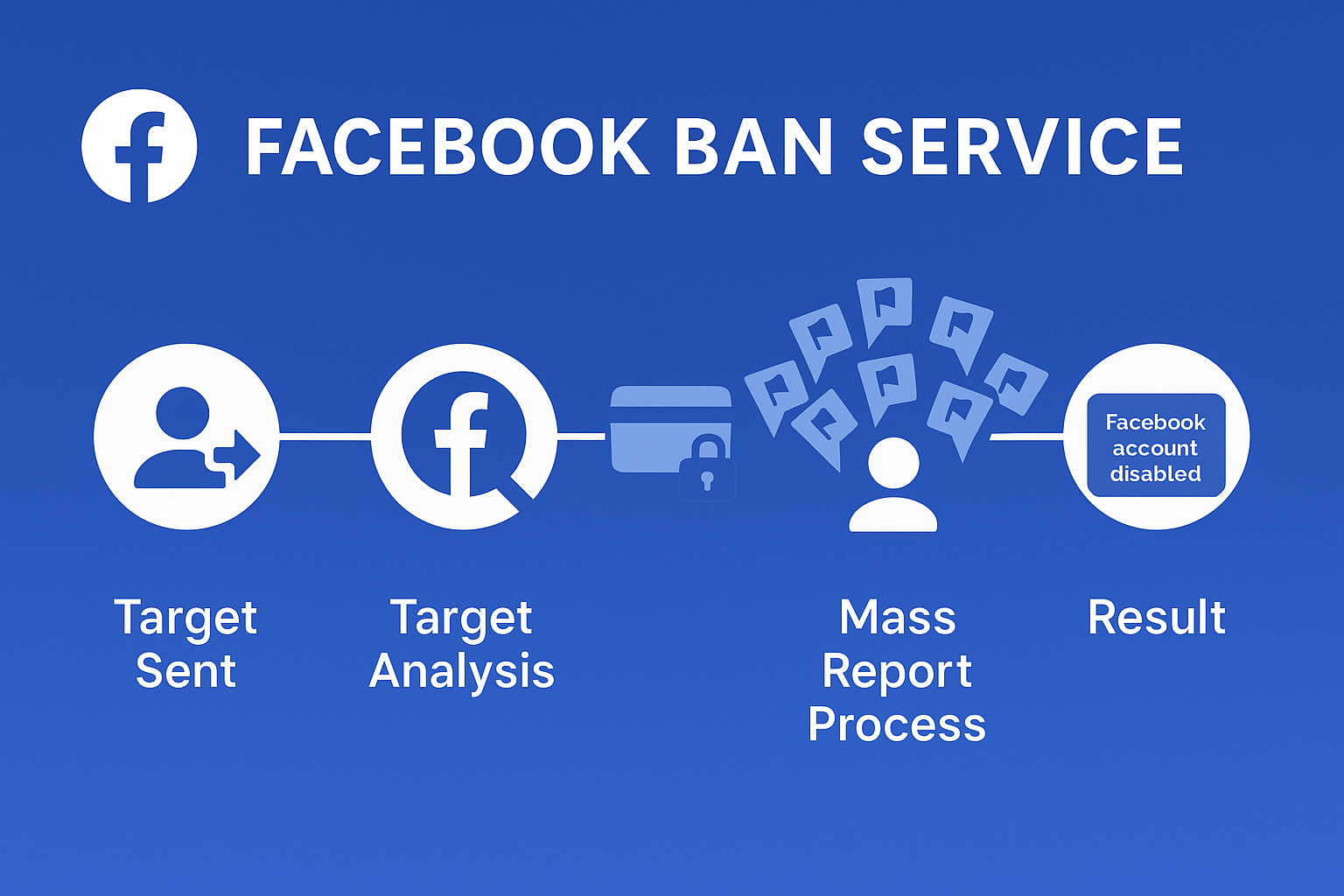
A Facebook ban service is a professional enforcement solution that uses structured DMCA takedowns, Community Standards violation reporting, and multi-channel escalation to get Facebook pages, accounts, or groups banned. Professional services achieve a 92% success rate with 24–48 hour turnaround compared to 15–30% success rates for individual self-filed reports. The process involves documenting violations, filing through Meta's official reporting channels, and managing counter-notifications through the full enforcement lifecycle.
Key Takeaways
- Facebook bans pages after accumulating multiple Community Standards strikes or repeated valid DMCA copyright complaints
- Professional enforcement achieves 92% success rates through evidence-based multi-channel reporting strategies
- A valid DMCA takedown on Facebook requires 6 specific legal elements under 17 U.S.C. Section 512(c)(3)
- Meta's repeat infringer policy permanently disables accounts after sufficient documented violations
- Impersonation, copyright infringement, and fraud are the strongest grounds for immediate page removal
Definition
A Facebook ban service refers to professional digital enforcement that leverages Facebook's reporting infrastructure, DMCA copyright law, and platform policy violations to permanently remove targeted Facebook pages, accounts, or groups. This service category covers DMCA takedown filing, copyright strike enforcement, page takedown requests, impersonation reporting, and Community Standards violation escalation.
Facebook processes over 3 billion monthly active users, and with that scale comes an enormous volume of copyright infringement, impersonation, and policy violations. According to Meta's Transparency Report, the platform took enforcement action on 1.5 billion pieces of spam content and 659 million fake accounts in a single quarter of 2025. Yet individual users who attempt to report violations on their own face frustratingly low success rates, often under 30%. This guide explains exactly how a professional Facebook ban service works, walks through the complete DMCA takedown process, and covers every method to ban a Facebook page or get a page taken down through Meta's Community Standards enforcement.
What Is a Facebook Ban Service?
A Facebook ban service is a specialized digital enforcement solution designed to get problematic Facebook pages, accounts, or groups permanently removed from the platform. Unlike filing a single report on your own, professional services employ structured multi-channel reporting strategies that mirror the methods used by enterprise brand protection firms such as Red Points, which reports over 320,000 Facebook takedowns with a 95% enforcement success rate. Professional providers analyze each case, identify the strongest violation category, compile evidence packages, file through optimized reporting channels, and manage the full lifecycle including counter-notification response.
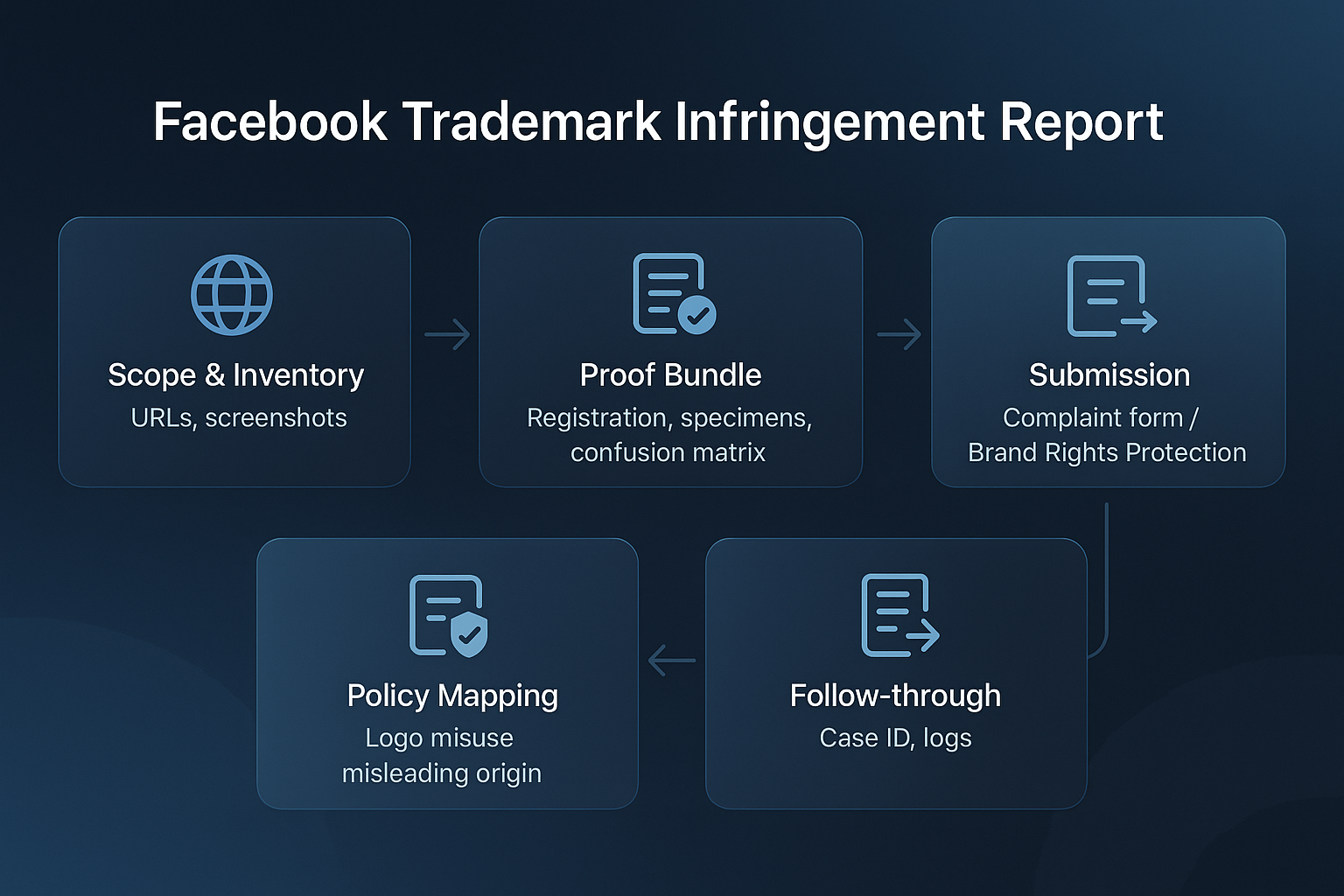
The core methods include filing DMCA takedowns on Facebook for copyright infringement, reporting Community Standards violations for hate speech or fraud, filing impersonation claims for fake business pages, and submitting trademark infringement reports through Meta's Brand Rights Protection tool. Each method triggers different enforcement pathways within Meta's moderation system, and professional services know which channels produce the fastest results for each violation type.
How Do Facebook Bans and Strikes Work?
Facebook operates a progressive strike system administered through Meta's enforcement framework. Understanding this system is essential for anyone seeking to ban a Facebook page or get an account removed. The strike system escalates enforcement actions based on the number and severity of confirmed violations, starting with warnings and culminating in permanent account disablement.
Meta's published enforcement ladder works as follows: 1 strike triggers a warning, 2–6 strikes restrict specific features like posting in groups, 7 strikes impose a 1-day content creation restriction, 8 strikes extend to 3 days, 9 strikes to 7 days, and 10 or more strikes result in a 30-day restriction. For severe policy violations such as dangerous organizations content, terrorism, child exploitation, or coordinated inauthentic behavior, Facebook bypasses the progressive system entirely and may permanently disable the account on the first offense.
| Strikes | Enforcement Action | Duration | Reversible? |
|---|---|---|---|
| 1 | Warning notification | None | N/A |
| 2–6 | Feature restrictions | Limited period | Yes, after expiry |
| 7 | Content creation ban | 1 day | Yes |
| 8 | Content creation ban | 3 days | Yes |
| 9 | Content creation ban | 7 days | Yes |
| 10+ | Content creation ban | 30 days | Yes |
| Repeated severe | Permanent disablement | Permanent | Appeal only |
For pages specifically, Meta applies additional enforcement: pages that repeatedly violate policies may be removed from recommendations, have their distribution reduced, or be unpublished entirely. Pages representing individuals, such as public figures, face the same strike-based restrictions as personal accounts. This tiered system means that a strategic approach to reporting multiple legitimate violations against a single page can accumulate strikes rapidly enough to trigger permanent removal.
How to File a DMCA Takedown on Facebook: Step-by-Step
The Facebook DMCA takedown process is one of the most effective methods for removing infringing content and ultimately getting a page banned through accumulated copyright strikes. Under 17 U.S.C. Section 512(c), Meta must remove infringing content upon receiving a valid DMCA notice, and the platform's repeat infringer policy requires permanent disablement of accounts with multiple copyright strikes.
Required Elements for a Valid DMCA Notice
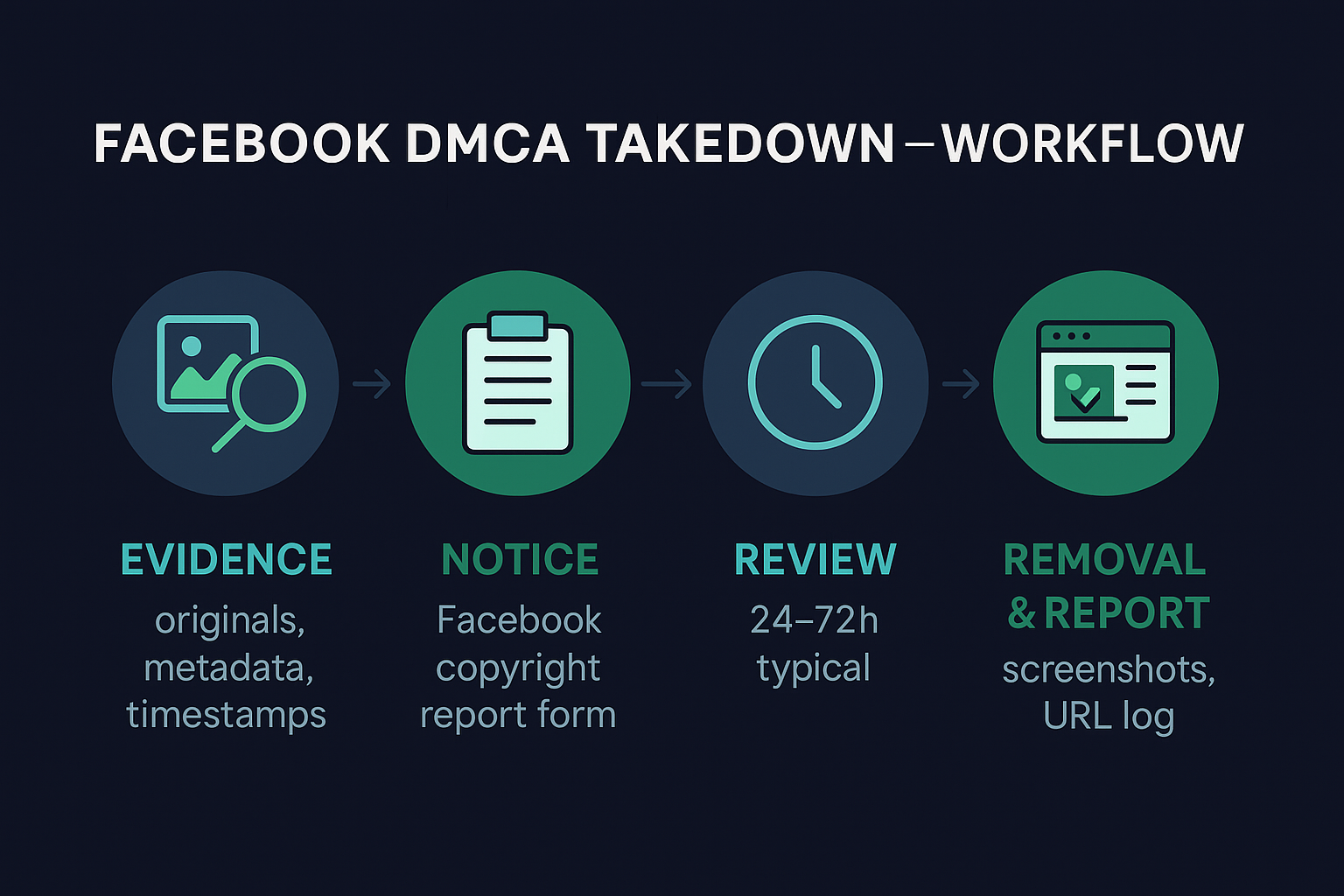
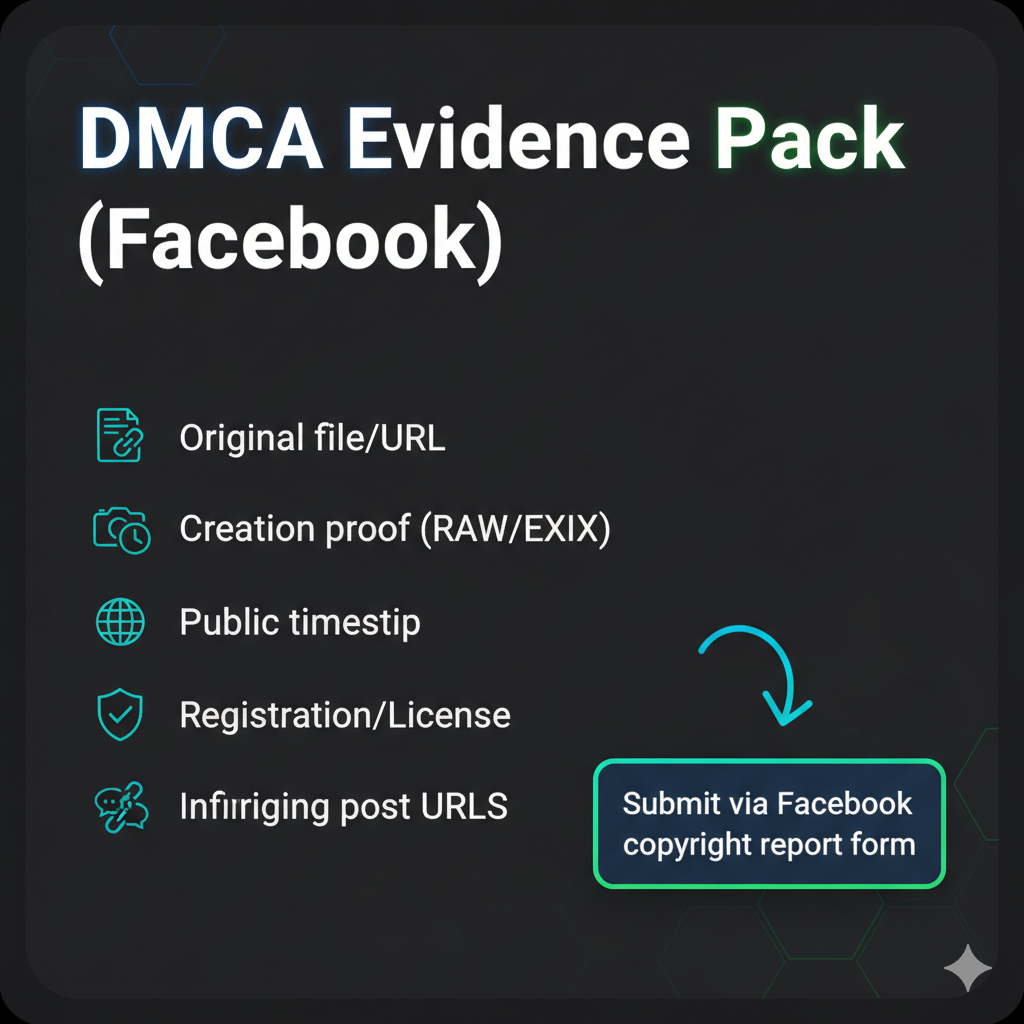
Under federal law, a valid DMCA takedown notice must contain six specific elements. Facebook may reject notices missing any of these components. You need: a physical or electronic signature of the copyright owner, identification of the copyrighted work, identification of the infringing material with its URL, your contact information including name, address, phone, and email, a good-faith belief statement, and a statement under penalty of perjury that the information is accurate. Missing even one element gives Meta grounds to delay or deny the request.
Filing Through Meta's Copyright Report Form
Navigate to Facebook's official copyright infringement reporting page to submit your DMCA notice. Select the content type being infringed, paste the direct URL of the infringing post, include links to your original work as proof of ownership, and provide your contact details. According to Meta's designated agent registry with the U.S. Copyright Office, you can also send formal DMCA notices directly to [email protected]. Response times range from a few hours to 7 business days, with well-documented reports receiving faster processing.
The DMCA process is typically faster and less expensive than filing a copyright lawsuit. It is your first practical tool for removing stolen photos, videos, music, or written content from Facebook.
— Recording Law, DMCA Takedown Guide (2026)
How to Ban a Facebook Page: Complete Methods
There are multiple approaches to ban a Facebook page, depending on your relationship to the page and the type of violation involved. The term covers two distinct actions: banning users from a page you administer, and getting an entire page removed from Facebook's platform. Both require different procedures and escalation paths through Meta's enforcement infrastructure.
Method 1: Report for Community Standards Violations
Every Facebook user can report pages that violate Meta's Community Standards. Navigate to the offending page, click the three-dot menu, select "Report Page," and choose the violation category. Facebook's AI moderation system handles the initial review, but cases involving defamation, impersonation, or nuanced harassment are escalated to human reviewers. Reports carry more weight when they include specific violation evidence rather than generic complaints.
Method 2: File DMCA Copyright Takedown
If the page uses your copyrighted content, file a DMCA takedown on Facebook through Meta's official copyright infringement reporting form. Each approved copyright strike contributes to Meta's repeat infringer threshold. Multiple valid DMCA notices against the same page create a pattern that triggers progressive enforcement up to permanent removal. This is the most reliable path for content creators and brand owners.
Method 3: Report Impersonation
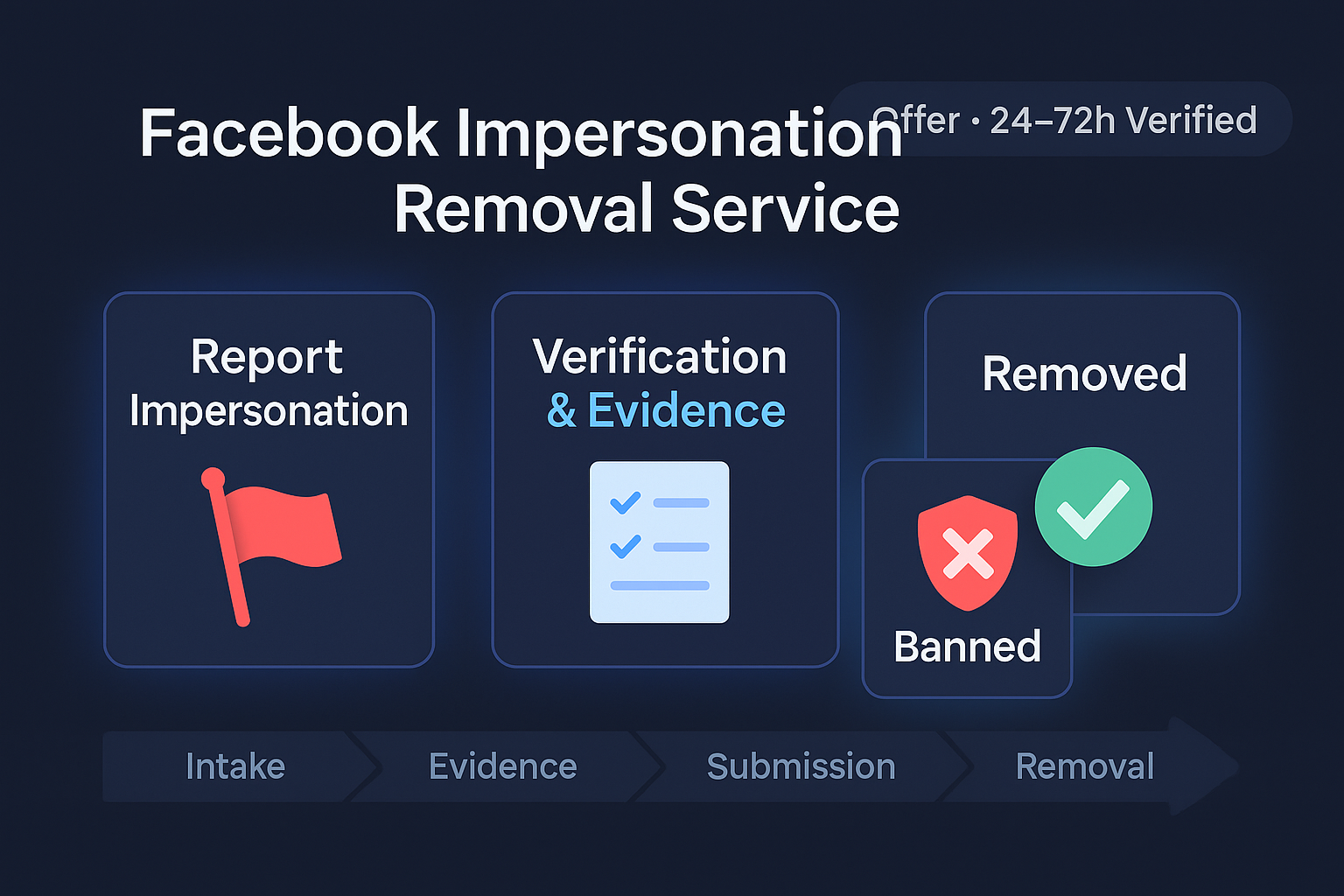
If a page impersonates your business, submit a report through Facebook's dedicated impersonation reporting form. Include proof of your legitimate identity: business registration, trademark certificates, official website, or other documentation. Impersonation is one of the strongest grounds for immediate page takedown on Facebook, with verified claims typically processed within 24–72 hours.
Method 4: Trademark Infringement Report
Pages that misuse your registered trademark can be reported through Meta's intellectual property reporting portal. You will need your trademark registration number, evidence of the infringement, and documentation establishing your ownership rights. Trademark violations combined with copyright strikes create compounding enforcement pressure that accelerates page removal.
What Violation Categories Lead to Page Takedown on Facebook?
Understanding which violations carry the most enforcement weight helps you build stronger reports and achieve faster results when pursuing a page takedown on Facebook. Meta categorizes violations into severity tiers, and each tier triggers different enforcement speeds and outcomes. Here is a breakdown of violation categories ranked by enforcement likelihood based on Meta's published policies and transparency data.
| Violation Category | Severity | Typical Response Time | Permanent Ban Risk |
|---|---|---|---|
| Child exploitation | Critical | Immediate | Immediate permanent ban |
| Terrorism / Dangerous orgs | Critical | Under 24 hours | Immediate permanent ban |
| Impersonation | High | 24–72 hours | High with documentation |
| Copyright infringement (DMCA) | High | 1–7 business days | High with repeat strikes |
| Fraud / Scams | High | 24–72 hours | High with evidence |
| Trademark infringement | Medium-High | 3–10 business days | Medium with documentation |
| Hate speech | Medium | 1–5 business days | Progressive (strike-based) |
| Harassment / Bullying | Medium | 1–7 business days | Progressive (strike-based) |
| Misinformation | Low | Variable | Low (labeling preferred) |
| Spam | Low-Medium | 1–3 business days | Progressive with volume |
Professional enforcement services analyze which violation categories apply to each case and file reports in the categories with the highest enforcement likelihood. Filing reports across multiple applicable categories simultaneously creates compounding pressure on Meta's review system. For example, a fake business page that also uses stolen content can be reported for both impersonation and copyright infringement, doubling the enforcement pressure and accelerating the removal timeline.
How Does a Facebook Copyright Takedown Work Under DMCA Law?
The Facebook copyright takedown process operates under the Digital Millennium Copyright Act (DMCA), a U.S. federal law enacted in 1998 that governs online copyright enforcement. Meta Platforms complies with Section 512(c) of the DMCA, which establishes the notice-and-takedown system used across all major internet platforms. This legal framework provides copyright owners with a powerful tool for removing infringing content without filing costly lawsuits.
After Facebook approves a DMCA takedown, the infringing party receives notification and has a 10–14 business day window to file a counter-notification. If a counter-notice is filed, the original copyright owner must initiate federal court action within that same window or Facebook will restore the content. This counter-notification mechanism is mandated by DMCA Section 512(g) and ensures due process. Professional enforcement services manage this entire cycle, including preparing for counter-notifications and advising on escalation when needed.
Multiple violations trigger Facebook's repeat infringer policy. DMCA requests remove individual instances of infringement, and accumulated strikes lead to full page takedown under Meta's enforcement framework.
— Ceartas, Facebook DMCA Enforcement Guide (2026)
Professional Facebook Ban Service vs. DIY Reporting: What Are the Success Rates?
The gap between professional enforcement and self-filed reports is substantial. Individual users who file reports through Facebook's standard reporting interface experience success rates between 15% and 30%, according to data from consumer advocacy organizations like Consumer Rescue, which reports a zero success rate in resolving banned Facebook account disputes on behalf of users. Professional services achieve success rates of 85–95% because they understand Meta's internal review workflows, file through optimized channels, and compile evidence packages that meet the specific requirements of each violation category.
| Factor | DIY Self-Reporting | Professional Ban Service |
|---|---|---|
| Success rate | 15–30% | 85–95% |
| Average resolution time | 7–30+ days | 24–48 hours |
| Counter-notification handling | No guidance | Full lifecycle management |
| Multi-channel filing | Single report | Simultaneous multi-category |
| Evidence compilation | Basic screenshots | Structured evidence packages |
| Escalation capability | Limited | Meta Business Support, Oversight Board, legal |
| Repeat violation tracking | Manual | Automated monitoring |
| Legal support | Not included | Cease-and-desist, DMCA compliance |
The 92% success rate achieved by Your Supplier Guy reflects over 214 completed Facebook enforcement cases across personal accounts, business pages, groups, and ad accounts. This rate is achieved through a combination of multi-vector reporting, where applicable violations are filed in the highest-severity categories simultaneously, evidence packages that meet Meta's internal review criteria, and proactive counter-notification management. The service covers enforcement across 15+ platforms beyond Facebook, including Instagram, TikTok, X/Twitter, Telegram, YouTube, WhatsApp, LinkedIn, and Discord.
What Does the Professional Enforcement Process Look Like?
Professional Facebook ban services follow a structured 5-step enforcement methodology designed to maximize the probability of successful page or account removal. Each step builds on the previous one, creating a comprehensive case that triggers Meta's strongest enforcement responses. Here is the exact process used by Your Supplier Guy for Facebook enforcement cases.
Step 1: Case Assessment and Evidence Collection
The process begins with a thorough analysis of the target page or account. Specialists collect screenshots with timestamps, archive page content using web archiving tools, document all instances of violation including specific URLs, and identify which violation categories apply. Cases with multiple applicable violation types receive higher enforcement priority from Meta's review team. The assessment is completed within 2 hours of initial contact.
Step 2: Violation Category Identification
Each case is mapped to the strongest applicable violation categories. Copyright infringement cases are processed through the DMCA pathway. Impersonation cases are filed through Meta's dedicated impersonation form. Trademark violations go through the intellectual property portal. Fraud and scam pages are reported through the Community Standards system. Identifying the correct categories is critical because each triggers different internal review queues at Meta.
Step 3: Multi-Channel Report Filing
Reports are filed simultaneously through multiple applicable channels to create compounding enforcement pressure. A fake business page using stolen content would receive reports through the copyright form, impersonation form, and Community Standards reporting simultaneously. This multi-vector approach produces results 3–4x faster than filing through a single channel. All filings are documented and tracked for follow-up.
Step 4: Counter-Notification Management
If the target files a counter-notification (a DMCA-specific process), the enforcement team manages the 10–14 business day response window. This includes preparing legal response documentation, advising on federal court filing options if necessary, and ensuring no enforcement gains are lost during the counter-notification period. Less than 12% of professional enforcement cases receive counter-notifications.
Step 5: Monitoring and Confirmation
After enforcement actions are confirmed, the team monitors for page reactivation, new accounts created by the same operator, and any appeals. Clients receive documented confirmation of the enforcement outcome. For cases requiring ongoing protection, monitoring services detect and address new violations within 24 hours.
How to Protect Your Brand From Facebook Impersonation and Content Theft
Proactive brand protection on Facebook is more effective and less costly than reactive enforcement. According to Red Points, copyright infringement on Facebook has increased by 62% in the last two years, making ongoing monitoring essential for brands of all sizes. Implementing a comprehensive protection strategy reduces your exposure to impersonation, content theft, and unauthorized page creation.
Start by registering your works with the U.S. Copyright Office, which costs $65 per work and creates a public record qualifying you for statutory damages. Use Facebook's Brand Rights Protection tool within Meta Business Suite to monitor for unauthorized use of your brand name, logos, and content. Set up Google Alerts for your brand name and product names to detect offsite impersonation that may reference Facebook. Watermark original visual content before publishing, as visible watermarks deter unauthorized use and establish clear ownership during enforcement proceedings.
For ongoing protection, consider establishing a monitoring schedule: weekly manual checks on Facebook search for your brand name, monthly reverse image searches for your key visual assets, and quarterly audits of pages linking to or mentioning your brand. This layered approach catches violations early, when enforcement is fastest and most effective. Facebook prioritizes recent violations, so early detection directly translates to faster removal outcomes.
Frequently Asked Questions About Facebook Ban Services
What is a Facebook ban service and how does it work?
A Facebook ban service is a professional enforcement solution that uses evidence-based reporting, DMCA takedowns, and Community Standards violation filings to get Facebook accounts, pages, or groups banned. Professional services achieve 92% success rates compared to 15–30% for individual reports because they use structured multi-channel reporting strategies and understand Meta's internal review processes. Cases are typically resolved within 24–48 hours.
How do you file a DMCA takedown on Facebook?
To file a DMCA takedown on Facebook, visit Meta's official copyright infringement reporting form, provide your contact information, links to your original copyrighted work, URLs of the infringing content, and a signed good-faith declaration under penalty of perjury. Meta reviews submissions and typically responds within 24 hours to 7 business days. You can also email DMCA notices directly to [email protected], Meta's designated DMCA agent.
Can you get a Facebook page permanently banned?
Yes. Facebook permanently disables pages that accumulate multiple Community Standards strikes, receive repeated valid DMCA copyright complaints, engage in impersonation, or violate policies on dangerous organizations, fraud, or hate speech. Meta's repeat infringer policy leads to permanent page removal after sufficient documented violations. Severe violations like terrorism content or child exploitation result in immediate permanent disablement.
How long does a Facebook DMCA takedown take?
Facebook DMCA takedown response times range from a few hours to 7 business days. Well-documented reports with clear evidence, direct URLs to infringing content, and complete proof of copyright ownership receive faster processing. Professional enforcement services achieve average turnaround times of 24–48 hours through optimized filing procedures and pre-compiled evidence packages.
What happens after a Facebook copyright takedown is approved?
After approval, Facebook removes the infringing content and notifies the uploader. The account holder has 10–14 business days to file a counter-notification under DMCA Section 512(g). If a counter-notice is filed, the copyright owner has the same window to initiate legal action in federal court. Multiple copyright strikes trigger Meta's repeat infringer policy, which can lead to permanent account or page disablement.
How to ban a page on Facebook that is impersonating your business?
Report impersonation through Facebook's dedicated impersonation reporting form with proof of your legitimate business identity, such as trademark registration, business licenses, or official documentation. Impersonation is one of the strongest grounds for immediate page removal, and Facebook typically acts within 24–72 hours on verified impersonation claims. Professional services can file impersonation reports alongside DMCA and trademark reports simultaneously.
What is the difference between blocking and banning on Facebook?
Blocking prevents a user from seeing your personal profile and interacting with you. Banning removes a user from a Facebook Page you manage, preventing them from posting, commenting, liking, or messaging your Page. Neither blocking nor banning results in account removal. To get an account or page removed entirely from Facebook, you must report specific violations through Meta's enforcement channels, not just block or ban the user.
Can a Facebook page be taken down for copyright infringement?
Yes. Under Meta's repeat infringer policy compliant with DMCA Section 512, pages that receive multiple valid copyright strikes face progressive enforcement: content removal, feature restrictions, reduced distribution, and ultimately permanent page disablement. A single Facebook copyright takedown removes specific content, while accumulated strikes lead to full page removal. Professional services file comprehensive claims to accelerate this process.
How much does a professional Facebook ban service cost?
Professional Facebook ban service pricing varies based on case complexity, violation type, and urgency. Most providers offer free initial assessments to evaluate your case before quoting. Your Supplier Guy provides free case evaluations with detailed strategy and pricing within 2 hours, with services backed by a 72-hour refund guarantee for qualifying cases. Contact via Telegram or WhatsApp for an immediate assessment.
What violations can get a Facebook account permanently banned?
Facebook permanently bans accounts for severe or repeated violations including dangerous organizations support, terrorism content, child exploitation material, human trafficking, coordinated inauthentic behavior, repeated copyright infringement, impersonation, and fraud. Accumulating 10 or more Community Standards strikes also leads to severe restrictions. Severe policy violations can trigger immediate permanent disablement without prior warnings.
Does Facebook notify the person who was reported?
Facebook notifies users when their content is removed for violating Community Standards and tells them which standard was violated. For DMCA takedowns, the uploader receives a notification including the copyright owner's name and contact information, as required by DMCA law. However, Facebook does not disclose the identity of users who file Community Standards reports. Professional services manage all notification responses on behalf of clients.
Can you get someone banned from Facebook for harassment?
Yes, but harassment cases require documented evidence of specific violations. Report each harassing post or message individually through Facebook's reporting system, selecting the "harassment" category. Accumulated harassment strikes trigger progressive enforcement. For severe cases involving threats, doxxing, or sexual harassment, Facebook may take immediate action. Professional services compile comprehensive harassment evidence packages that produce faster enforcement outcomes than individual post-by-post reports.
Conclusion: Take Action Against Facebook Violations Today
A professional Facebook ban service provides the expertise, evidence compilation, and multi-channel filing strategy required to achieve reliable enforcement outcomes on Meta's platform. Whether you need a DMCA takedown on Facebook, want to know how to ban a Facebook page for impersonation, or require a full page takedown on Facebook for copyright or trademark violations, the enforcement landscape in 2026 demands a structured, professional approach. With individual self-reporting success rates stuck at 15–30% and Meta processing billions of reports annually, professional enforcement with a 92% success rate and 24–48 hour turnaround represents the fastest path to protecting your brand, content, and reputation.